Can Hypnosis tap Reincarnational Experiences?

????????????????????????????????????????????????????????????????????????????????????????????????????????????????????????????????????????????????????????????????????????????????

Hypnotic Age Regression: A Neglected Area of Human Potential
The full article will be in Phenomena Magazine  http://www.phenomenamagazine.co.uk. Sign up for a free copy now.

I recently wrote an article on my use of hypnosis and possible reincarnation. My experimental goal was to enhance the subject’s ESP, but her intense imagery interfered. I use an almost non-directive hypnotic technique. Here is an excerpt that some might find interesting.
“At our next session, she slipped into a deep hypnotic state more rapidly and easier. Her eye movements became more active, as if she were actively processing the visual image.
I asked where she was.
“In a cave,” she answered. “An ice cave.”
I reviewed non-leading questions I could ask her without knowing where, when, or who she was. I suggested she look down to examine if she wore any garments. If there were, she was to describe them.
Under her lids, her eyes looked down. “Fur. I’m wearing some kind of fur.”
Filled with uncertainty, I searched my thoughts for the next questions. She needed to see herself, to describe her clothing in more detail. “Look around the cave,” I said. “Is there anything shiny? Something that could reflect your image?”
She looked about, then said, “A pool of water.”
“Good,” I replied. “Look at yourself and tell me what you see.”
She tilted her head forward again, then said with faint surprise, “Oh. I’m a man.”
Asked to give more detail, she said her skin was dark and that s/he had long, coarse unkempt hair.
I had never encountered anything like this before. Was this a fantasy or, possibly, a reincarnational being? What practical use would this be and how could I ever verify it? I didn’t know that in a few minutes Mallory would unwittingly offer a form of proof.
I decided to end the session and took every precaution to bring Mallory out of hypnosis safely. Afterwards, we spoke for a while. She remembered every aspect of the experience and was as puzzled about it as I.
She put on her coat. As we talked near the door, I noticed that she rubbed her right arm occasionally. After a few minutes, it was obvious.
She added more details, continuing to massage the arm through her coat sleeve.
My suspicions were aroused. I asked if her arm bothered her. As she was a nurse, I thought she might have strained it that day.
However, that wasn’t the case. My intuition urged me to stay a while longer. I asked her to remove her coat and recline again. She agreed.
Because we had explored three time periods that day, I was unsure when her arm began to bother her. She slipped into a deep hypnotic state again. I gave her an open suggestion: to go to “wherever” she was when the arm felt different.
She became quiet.
Exhausted, I waited silently. I’d worked with patients all day; it was now near midnight. I leaned my head back and closed my eyes awaiting her response.
After a few minutes, I felt a sharp chill, real enough to cause me to open my eyes. I examined the drapes on the window over her, but felt no draft. Then, I asked, “Where are you?”
I was bewildered. How was it that, in my fatigue and in a closed office, I could feel that sudden chill, as if a cold breeze wafted over me?
“I’m in the ice cave,” she answered.
“Look down at your arm and tell me what you see,” I said.
Under her lids, her eyes looked down and towards her right arm. Then she answered in the same untroubled tone: “Oh. I don’t have one.”
Surprised, I asked what had happened to the arm. “A bear,” she replied. “A white bear.”
A dark-skinned man wearing furs; an ice cave; a change in gender. All these things led me to suspect that, if there was any truth to this, he was possibly out of the past, perhaps prehistoric. However, my frame of reference may have been wrong. Instead, if this was a true reincarnational memory, it suggested a possible Inuit living closer to the present. Still, there was no way to verify the experience.
My immediate problem was clinical, not research! Somehow, she carried the injury–fantasy or reincarnation–into the present. What could I do? My education and experience offered no answer to this problem. I reasoned that if her body image had changed while she was the man, I might alter it back to the original. I rubbed her arm, suggesting that it was like pliable taffy, capable of stretching to reach her fingertips. After a few minutes, I asked if there was improvement. She said that there was.
When Mallory was brought out of hypnosis again. The sensation was gone, vanished, and she was left with no aftereffects only the memory of strange feelings in her arm.
What transpired in this curious event? Apparently, something quite astonishing. According to the Journal of Trauma (2008), “phantom pain and phantom sensations are often long-term consequences of amputation. Amputees experience phantom sensations and phantom pain within 1 month after amputation, a second peak occurs 12 months after amputation.” Phantom limbs typically decrease and disappear over time.
Mallory’s experience was clinically significant because she did not report the missing arm during or after her “visit” to that time period, even after coming out of hypnosis. Oddly, the “ice man” had already adapted to the missing arm—or the change in his body image. This adaptation to the loss of an arm carried over into Mallory’s experience somewhere beyond her normal conscious state.
This suggests that, if this was an authentic reincarnational memory, we tapped into it at least one year after the man’s injury, when his body image had adjusted to the missing arm.”

I’m in the future!

                        dreamstime

“WHOOPS! I’VE GONE TOO FAR AROUND THE CIRCLE. I’M IN THE FUTURE!”

After hours of exploring possible past lives, I decided to “push the envelope.” Mary, now easily slipping into a deep hypnotic state, was guided to move further into the past. Moments of my encouragement were punctuated by periods of silent waiting as she adjusted to her ever-deepening state of consciousness.

Then, to my surprise, Mary said, “Whoops! I’ve gone too far around the circle. I’m in the future!”

What circle? The future? What could she mean?

Following her pronouncement and making the situation even more provocative and anxious,  Mary would (or could) not speak. She continued to show signs of being deeply entranced, but she didn’t reply to my questions.

I considered what I might do, then asked if she could write. Eyes closed, she nodded.

But what could I ask? Heart pounding, Mary and I were in unexplored territory. Then it occurred to me: Her name. She’d demonstrated other, possibly past personalities. Now, unbidden, she was about to reveal a possible future personage.

I placed paper on her chest and a pencil in her hand. “Would you write your name,” I asked.

Unfamiliar with the change in communication, she gripped the pencil and, without looking, wrote Rishah Shaelum.

Later, I looked up the name. She didn’t have enough time to process it, so I was very interested in seeing if it bore any relationship to past or present names.

There it was. In Strong’s Concordance, Rishah (the original word in Hebrew was רִאשֹׁת) meant beginning time, early time. It was a feminine noun phonetically spelled ree-shaw’ and derived from rosh, or head.

But Mary was an Italian and a Roman Catholic. Where could she have come up a Hebrew name?

I still had to investigate Shaelum.

Mary Three: Death, Limbo, and the Cave

reincarnation

The ancient Roman soldier thrust his short sword through Mary’s abdomen. Her hands held her stomach. “I’m dying,” she said quietly, unemotionally.

My muscles tightened with cold fear. In all the hypnosis books and journals I’d read, not one had mentioned a subject’s hypnotic murder and death. To the eye, Mary looked normal. She breathed slowly and regularly; not unexpectedly, her eyes moved under the lids as if she were looking about, scanning.

Should I try to bring her out of hypnosis? Or should I give her a suggestion to counter her declaration?

Gently, slowly, in a soothing voice I urged her towards ordinary consciousness for a debriefing and to examine her clinically. She opened her eyes and sat up, unshaken. Apparently, I was more fearful than she.

She described her experience in extraordinary detail, too quickly and spontaneously than someone aiming to please the researcher. What happened was real–at least to Mary.

I asked if she recalled anything after her “death ?” She described a limbo state, that she had left the scene of the slaughter, and felt peaceful and no pain. Unlike many sensationalistic reports (e.g., Bridey Murphy), the person she was under hypnosis was no one special, not the Holy Mother or some other significant historical or Biblical figure.

I asked if she wanted to continue and she agreed. This time, slipping into a deep hypnotic state was more rapid and easier. I suggested that she return to the last state…and waited. I was exhausted. After working with patients all day, it was now near midnight. I leaned my head back and closed my eyes to rest them. Suddenly, I felt a cold draft. I looked around, particularly at the curtain-covered windows. They were still, unmoving.

Mary’s eye movements were more active. I said, “Where are you?” “In a cave,” she answered. “An ice cave.”

I was stunned. How was it that, in my fatigue and in a closed office, I could feel that sudden chill, as if a cold breeze wafted over me? Was this coincidence…or telepathy?

I wondered what I could ask her without knowing where–or when–she was. I suggested she look down and asked if she wore any garments and, if so, to describe them. Under her lids, her eyes looked down. “Fur. I’m wearing some kind of fur.”

Surprised and uncertain, I searched my thoughts for the next questions. She needed to see herself, to describe her clothing in more detail to help orient me. “Look around the cave,” I said. “Is there anything shiny? Something that could reflect your image?”

She looked about, then said, “There’s a pool of water.” “Good,” I replied. “Look at yourself and tell me what you see.”

She tilted her head forward, then said matter-of-factly, “Oh. I’m a man.” 

Go back

Your message has been sent

Warning
Warning
Warning
Warning

Warning.

Mary Two: Death by Roman Short Sword

astral-projection


Mary’s hypnotic state deepened with each induction. She was tested at each level to evaluate her depth based on the Stanford Hypnotic Susceptibility Scale. When she reached level 8,Verbal Inhibition, we began in earnest.

She was never given direct suggestions. I was searching for reactions that would occur without clues of any type: I avoided leading her.

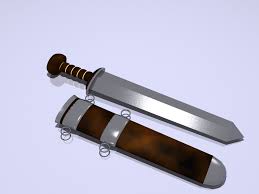
Soon, she described being with a man. She didn’t identify him, only that he was rough-looking and threatening. Then, the unexpected happened: Mary grimaced. I asked what was happening; she said he’d stabbed her with a sword. Later, the sword was identified as a Gladius, an ancient Roman short sword. 

short sword

I was now faced with her report of a severe injury. I comforted her and suggested that she allow herself to feel the pain, but as if it were dulled. She showed some easing. Then another shock: She said she was dying. 

Whether an actual reincarnational memory or fantasy, this was a threat to both of us. What could I do with someone who not only believed she was dying, but felt the pain and saw the flowing blood?

As I watched her writhe, my pulse quickened and my heart raced. This was far from what I expected–and so soon after beginning our research.

Something within suggested that I allow her to “die.” It was not mere curiosity. I was responsible for her well-being.  It was more: a form of inner guidance or instinct  that led me to believe it was the correct path.

During the late hours of that Winter’s night, Mary died at the hands of a two-thousand year old man.

Reincarnation…or Imagination? Mary One.

Mindscape

Mary was an attractive twenty-something woman trapped in an abusive marriage. We worked together for two years and, thankfully, resolved her issues. She’d left her abusive husband and was living a more contented–and certainly less fearful– life. During treatment, I used hypnosis to help her remember past memories that led directly to the marriage. She was an excellent subject , She was able to recall how, at the wedding, she believed it was wrong and wanted to cancel it. Her parents pressured her to continue. With the memory resurfacing, she knew she had the chance to assert herself. A simple “no” could have saved her pain, grief, and shame.

Sometime later, when I was exploring hypnosis and alleged reincarnation, I asked Mary if she would like to participate. I was delighted when she agreed: she was capable of reaching deep levels of hypnosis.

This is Mary’s story…and how we aimed to explore past lives only to end up unexpectedly in the future. This is not the story of a multiple personality (or DID), but a sane, sound woman–a nurse–who never had the least interest in past lives–until she ran headlong into them.

In the next installment, I’ll begin with her first stories of possible past lives and how she “went too far around the circle, into the future.

For readers interested in a serious study of the subject, read Ian Stevenson’s Twenty Cases Suggestive of Past Lives.